
Start With Cedar City Name or Address
A Cedar City residents directory search works best when the first step follows the clue in hand. An address points to Iron County GIS and EagleWeb. A person’s name can move through the voter lookup, court index, business records, or library collections. An older date sends the search toward newspapers, cemetery files, census material, and State Archives finding aids. No single roll identifies every person connected with a structure. An owner, a voter, an occupant, a visitor, and a former household member can leave different records, or none that are open to the public.
Use the official trail in a steady order. Match the city and ZIP first, then save the spelling, date, parcel or case number returned by the first source. Those details make the next search narrower. The county seat is Parowan, but Cedar City has important service points for courts, health records, police, planning, cemetery work, and the library.
- Normalize the Cedar City street spelling, direction, unit, and ZIP. Test both 84720 and 84721 when the record is older.
- Open Iron County Account Search or the parcel map and note the parcel, account, owner, mailing address, and legal reference.
- Compare the address with Utah Vote Search and treat the result as a limited registration record, not a household list.
- Search EagleWeb Document Search, then move to the Recorder counter or State Archives when an image or older deed is needed.
- For a past resident, pair the address with newspapers, cemetery files, library histories, census years, and a focused GRAMA request.
Cedar City Records Offices in Context
Iron County’s records map is split between Cedar City and Parowan. The Recorder, Clerk, Assessor, Treasurer, and general county counters are at 68 S 100 E in Parowan. Cedar City supplies the local District Court, Southwest Utah Public Health desk, police records route, cemetery office, Building and Zoning, and library. That geography matters when an online search gives only an index or when a request needs a custodian’s review.
Iron County Recorder / Surveyor
68 S 100 E, Parowan, UT 84761
435-477-8350
Iron County Assessor
PO Box 537, Parowan, UT 84761
Property accounts through EagleWeb
The Iron County Clerk elections route is the local contact for voter-file questions, while Cedar City offices handle local police, planning, cemetery, and library service points.
The Iron County elections page is the linked starting point for checking the public voter-record route.
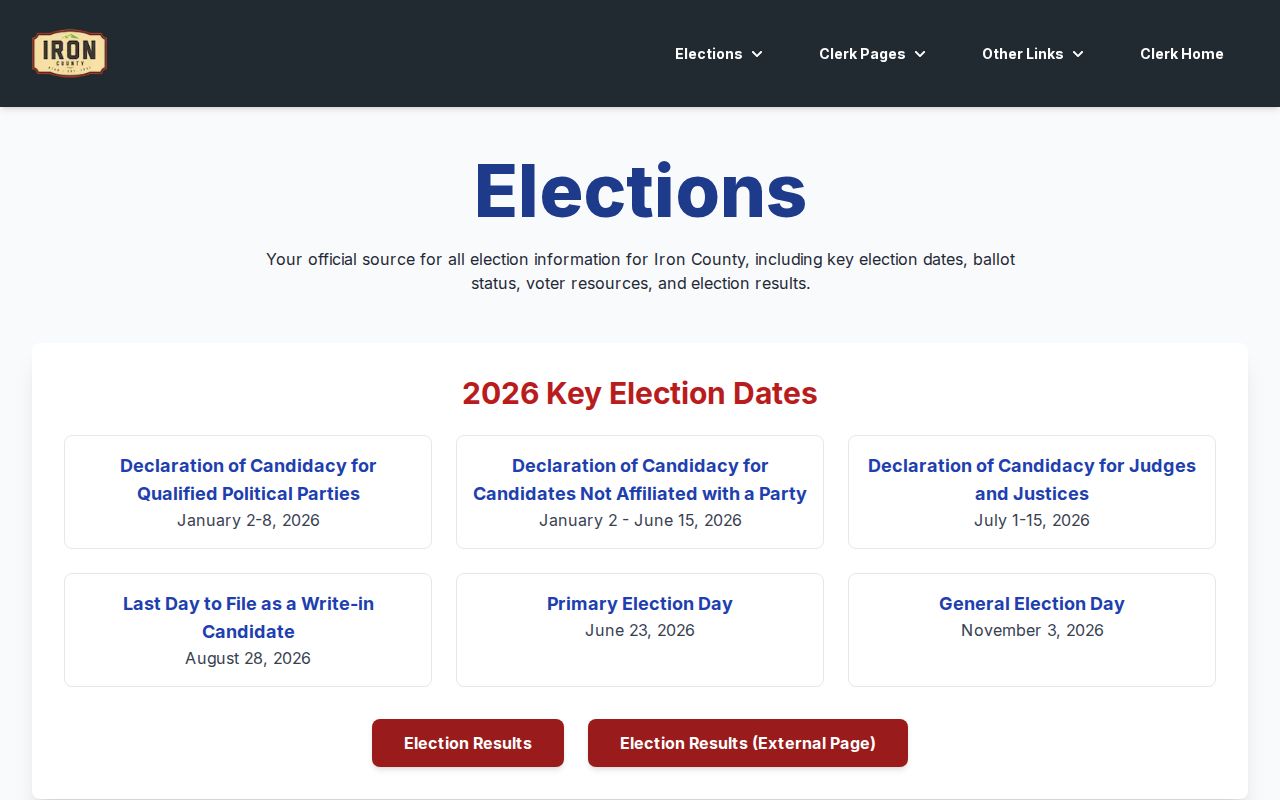
This route supplies election-office context; any returned registration fields still need to be read within Utah’s public-access limits.
Read Cedar City Parcel Before the Name
Iron County’s public GIS layer makes the parcel the useful bridge between a street and a record. A returned row can include municipality, parcel and account identifiers, district, year, indexed owner, mailing address, acreage, land and improvement values, taxes, book/page, and entry number. Those fields describe the parcel and the record trail. They do not prove that the indexed owner occupies the building or that every person at the address appears in the roll.
A sample Cedar City row shows why field labels matter. Pearl Group Holdings L L C appears as the indexed owner, while the mailing address is in Bountiful. The parcel is in Cedar City, but the returned row has no populated situs, subdivision, or zoning field. A mailing address is where notices go. A situs address is the physical location tied to the parcel. Keeping those separate prevents a clean-looking result from becoming a false resident claim.
- Roll
- A government list or account set, such as a property or voter roll.
- Parcel
- A mapped piece of land identified by a parcel or account number.
- Index
- A finding aid that points to a record. It may not include the record image.
- Criss-cross directory
- An older reverse directory arranged by address, often paired with a name entry.
Cedar City EagleWeb Indexes and Images
EagleWeb has two useful doors: Document Search and Account Search. The guest search is free and can connect owners, values, taxes, legal information, and recorded-document abstracts with a parcel. The Recorder’s description names warranty deeds, reconveyances, federal tax liens, mortgages, plats, military discharges, and other recorded documents. The live portal needs JavaScript and cookies, and its public description does not state the electronic-index start year.
That missing cutoff is a fact to preserve. The State Archives supplies the older path, including Iron County deeds from 1851-1961 and grantor/grantee runs that cover 1880-1927 and 1927-1947. EagleWeb images are available at the Recorder office rather than exposed through the guest crawl. A free hit is therefore a lead. An image, certified copy, or older book requires the custodian, a counter visit, a copy request, or archival research.
A search result can be useful even when it stops short of a scan. Save the party names, document family, account or legal reference, and any book/page or entry number before calling. The Recorder says it does not prepare or interpret legal documents, perform title searches, or give legal advice.
| EagleWeb control | What the research confirms |
|---|---|
| Search mode | Document Search or Account Search. |
| Search action | Enter criteria, select Search, then open a result summary. |
| Account result | Owner, value, taxes, legal information, and recorded-document abstracts may be associated with a parcel. |
| Document result | Full index details open from a result; exact live labels were not exposed in the crawl. |
| Image access | Recorder office access rather than open guest-crawl image viewing. |
The Iron County EagleWeb page is the source to open when the property or document fields need to be checked directly.
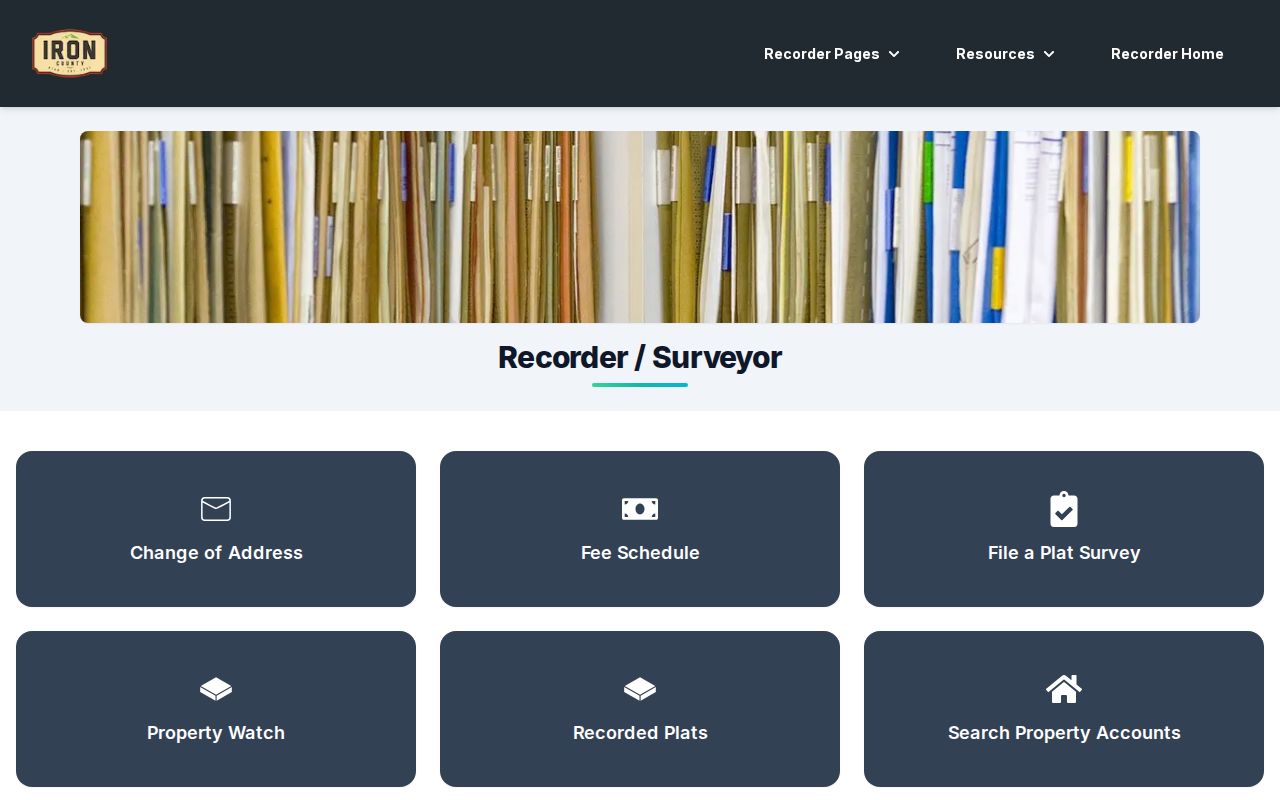
The companion Iron County Assessor guidance explains the property-account role, while the Recorder page gives office rules and copy fees. The index is the starting point, not the end of the chain.
Current Cedar City Resident Sources
Current resident evidence is spread across records with different purposes. The property roll is strongest for an owner and parcel. The voter route is strongest for a public registration match. The recorder connects names to recorded instruments. City staff cards list employees, not residents, and construction filings show project participants rather than every household. These distinctions keep a Cedar City residents directory search tied to what the source actually says.
| Source | Who It Lists | Keeper | Access |
|---|---|---|---|
| Iron County property account | Indexed owners and parcel clues | Assessor / EagleWeb | Free guest search; image limits |
| Utah voter lookup | Public registration fields | Utah elections | Protected fields withheld |
| EagleWeb document index | Parties to deeds, liens, and plats | Recorder | Free index; office images |
| Cedar City staff directory | City employees and departments | City administration | Free online cards |
| Construction Registry | Project and filing participants | Utah registry route | Search free; detail may cost |
For one person, compare at least two record types and keep the dates visible. The detailed one-person sequence appears in the Cedar City resident lookup walkthrough. For an address, follow the parcel and deed chain through the Cedar City street directory route.
Birth, Death, Marriage, and Divorce
Utah’s vital records are statewide, not a Cedar City municipal name list. Birth and death records begin in 1905 in the state system. Utah Code §26B-8-125 opens births after 100 years, deaths after 50, and marriage or divorce records after 75. Before those windows, certified copies require an eligible relationship, direct tangible interest, approved research, or a court order.
Southwest Utah Public Health offers a local route for eligible Utah events. The state OVRS forms provide mail, online, and in-person choices, with current initial fees of $22 for birth, $30 for death, and $18 for marriage or divorce abstracts. A historical index, newspaper notice, or archive image is not the same as an eligible certified copy.
The Utah vital-records page is the linked source for current forms, ordering channels, and eligibility guidance.
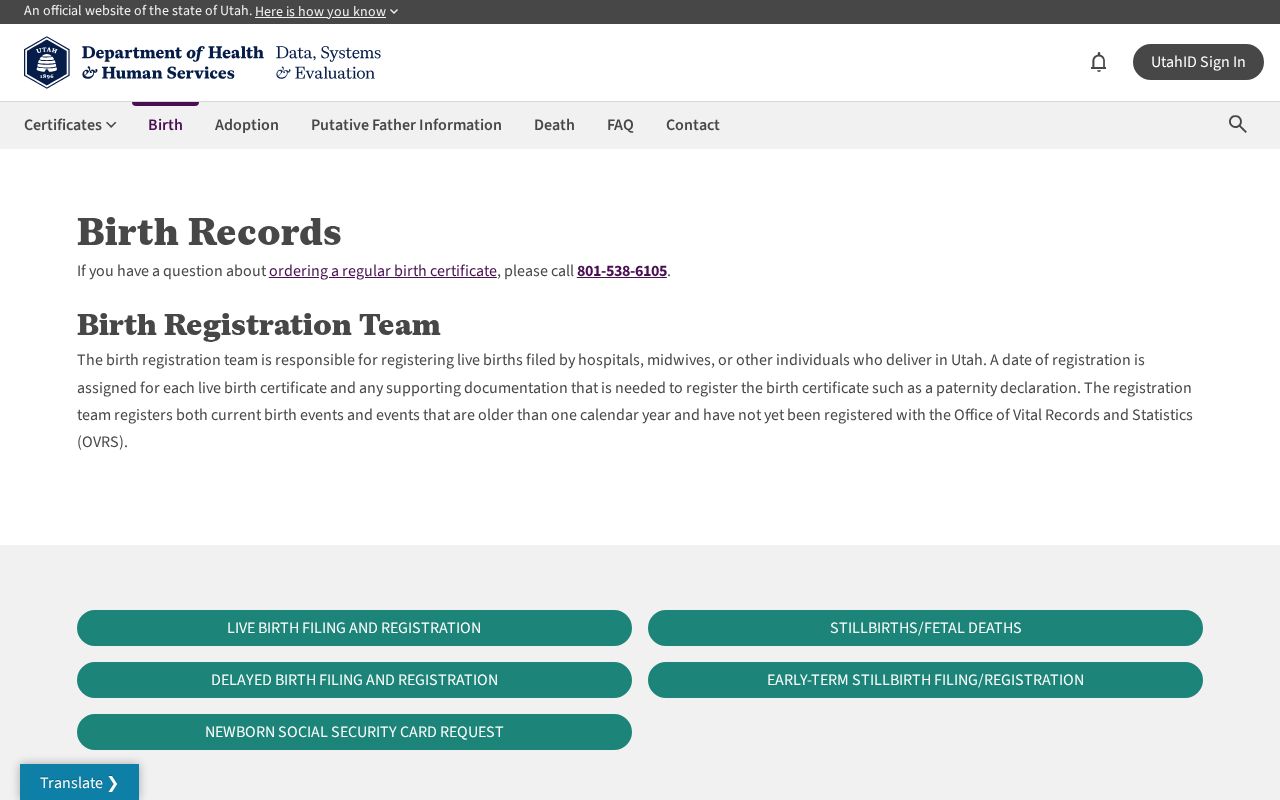
Use the page to confirm the event type and access window before treating an index hit as a request for a certified copy.
Cedar City Voter Result Is Limited
A voter result answers a narrow civic question: whether a registration record matches the search details under the public fields Utah permits. It can show a name, address, districts, party, status, and vote history. It cannot show every adult or child at an address, and it cannot supply a private phone number, email, full birth date, or identification number. The distinction is central to any Cedar City residents directory search.
Protected voters are withheld. Utah also restricts unauthorized posting, disclosure, and searches made under false pretenses. Use the lookup to test a date and address, then confirm the connection with a parcel, court case, or dated newspaper. If the result is missing, the absence may reflect a privacy program rather than a move.
When Cedar City Evidence Appears in Court
Case records can help separate two people with the same name. Xchange results include the filing year within the case number, county, court location, case type, filing date, party roles, and case history. A public address may appear in a filing, but it is a date-stamped service or party field, not proof of a current home. The Cedar District Court serves the Fifth District, while Iron County Justice Court has a separate request route.
For federal material, PACER is the remote path to nonsealed District of Utah cases. For local Justice Court files, the form can request docket history, minutes, judgments, citations, discovery, plea agreements, dispositions, or audio. Eligibility and fees differ by record, and protected matters remain closed. A court hit is one piece of a person match, never the whole profile.
Cedar City’s Address Grid Has a History
Cedar City’s street origin follows Center Street or SR-14 for north and south numbering, and Main Street or SR-130 for east and west numbering. Parowan, Enoch, Kanarraville, and other Iron County towns use their own origins. A street name without a direction or municipality can therefore point to the wrong record set.
Early Cedar City geography adds another layer. Fort Cedar was abandoned in 1853, Coal Creek runoff affected the first Plat A conditions, and the final Plat B followed in 1855. For a historical residents directory search, test the legal description and old town footprint rather than assuming today’s grid was always in place.
Cedar City Permits Add Dates
Cedar City Building and Zoning records can put a project date beside a physical address. The portal supports permit-document uploads, inspection requests, and permit-status viewing, while residential submissions require the actual property address in the documents. A public search of all permit history was not located. Older files may need the department or a GRAMA request.
The State Construction Registry offers a no-charge public search keyed to an issuing municipality. Choose Cedar City or Iron County, leave other fields open, and add a date range when needed. Names can occur as contractors, owners, or filing participants. A construction record helps place work in time, but it is not a complete Cedar City resident directory.
Cedar City Business and Jail Records
Utah Commerce searches entities, principals, registered agents, and UCC filings. DOPL License Lookup uses a license number, four-digit number, and professional or entity type. These tools can test an affiliation, credential, or company record connected with a Cedar City name. A filing address is not automatically a home address.
The Utah Commerce corporations search is the source to check when a Cedar City name may connect to an entity or UCC filing.
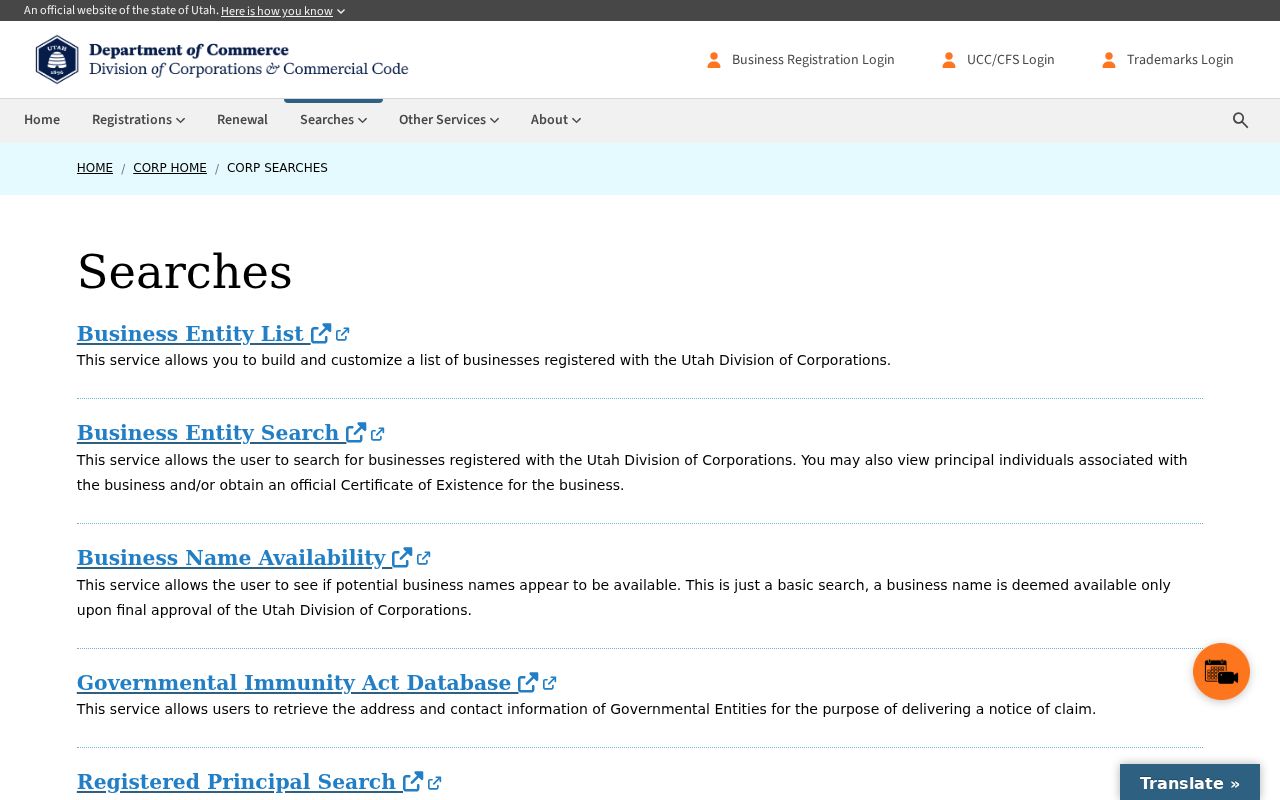
A business result establishes an organization relationship or filing trail; it does not turn a registered office into a private residence.
The Utah DOPL License Lookup is the next linked source when a professional credential or entity status is the relevant clue.
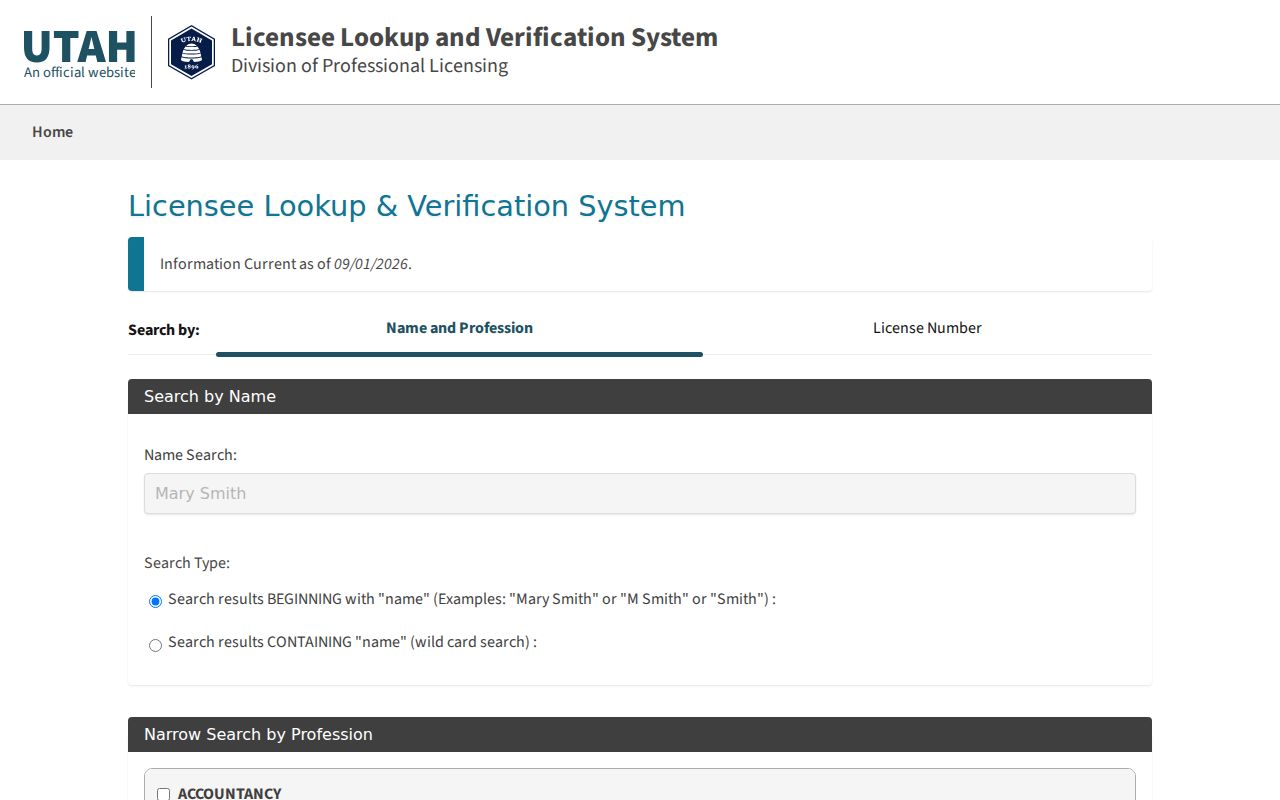
Read the license result as a credential or status clue, then keep the filing address separate from any household conclusion.
Iron County Sheriff booking pages offer a current informational search by name or offense, with booking date, offense, bond, and custody fields. Utah DOC covers current incarcerated, probation, or parole status by name or UDC ID. These are narrow records with their own dates and limits.
The Iron County Sheriff bookings page is the source to use for the current custody fields described here.
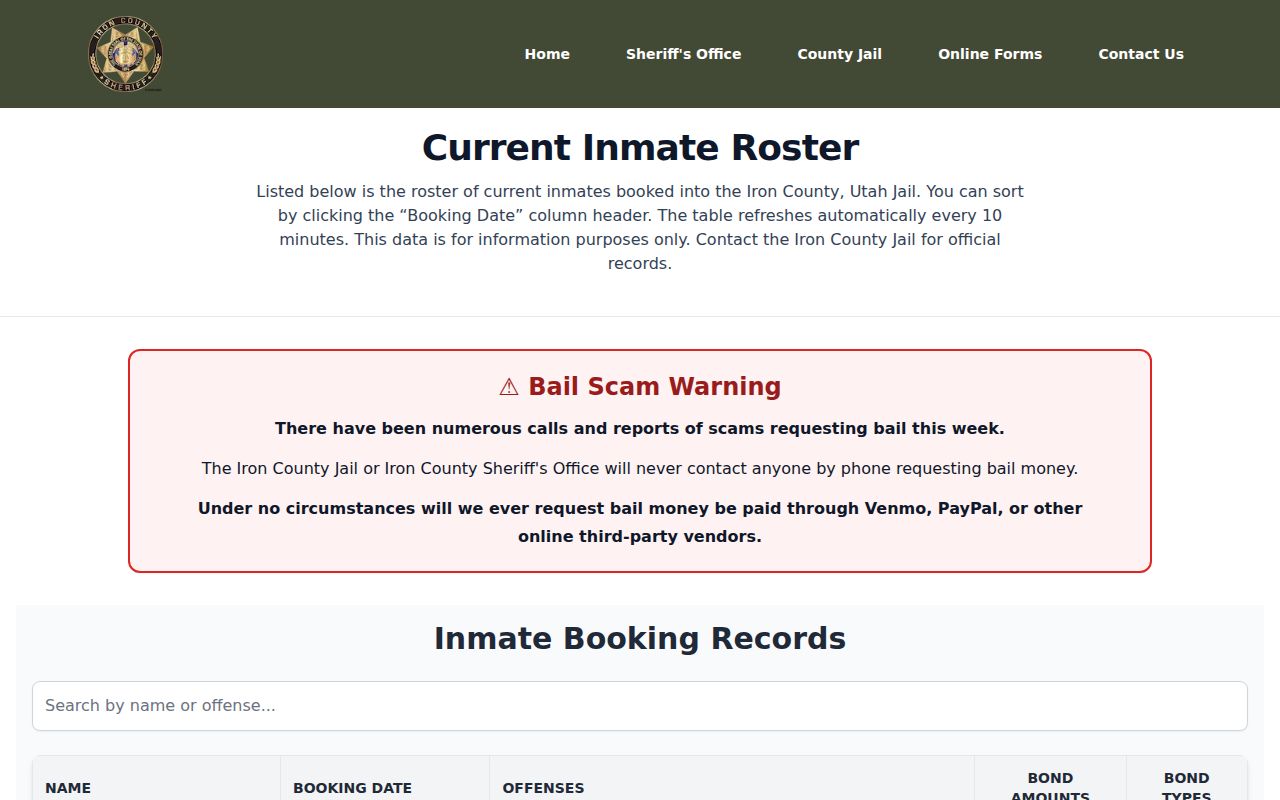
Booking information is a dated, narrow custody record and should not be generalized into a complete resident profile.
Compare Official Rolls With Paid Tools
Official sources have a custodian, a stated record purpose, and a route for correction or a copy request. Commercial people-finder tools may combine old files, sell access, and repeat an address without showing which record supplied it. They can be a lead at most. For Cedar City family research, a dated newspaper, parcel row, court case number, or library finding aid is easier to evaluate.
| Source type | Strength | Weak point |
|---|---|---|
| County property account | Parcel, owner, value, tax clues | Owner may not occupy the parcel |
| Voter lookup | Public registration fields | Protected and nonregistered people are absent |
| Historical collection | Past names, dates, relationships | Coverage, OCR, and access vary |
| Commercial finder category | May suggest a spelling or lead | Source, freshness, and lawful use may be unclear |
Cedar City Safe at Home Protections
Utah Safe at Home gives certified participants a substitute address and mail-forwarding service. The actual residence, mailing city and county, precinct, phone, and unique identifiers are protected in ordinary use. Utah voter rules also withhold at-risk records. A substitute address or no result should be treated as a safety signal, not as evidence that someone is absent from Cedar City.
For a lawful family or records question, use the public information that remains, contact the proper custodian, and do not try to defeat an address-protection program. The same approach applies to redacted court, medical, educational, law-enforcement, and vital-record fields.
Cedar City GRAMA Requests
Utah’s Government Records Access and Management Act, or GRAMA, is the written route for an existing record not exposed online. Include the requester’s name, mailing address, phone if available, and a specific description. The custodian need not answer a broad question or create a new record. Requests can go through the statewide Open Records Portal, by email, mail, fax, or in person.
Ordinary response can take up to ten business days. Inspection is generally free, while copies, staff time, and media can carry actual costs under Utah Code §§63G-2-201, 63G-2-203, and 63G-2-204. Cedar City Police uses a records-request form, and Iron County Justice Court has its own request route for docket history, minutes, judgments, citations, dispositions, discovery, or audio.
The Utah Open Records Portal is the linked source for starting a specific GRAMA request.
Describe the existing record precisely, then expect the custodian’s classification, response, and copy rules to control access.
Historical Cedar City Directories and Shelves
The historical Cedar City residents directory trail is not one verified run of printed volumes. The Cedar City Library has local people, family, place, and event histories, while SUU Archives holds family papers and community programs. Newspapers supply names and addresses across time. The University of Utah digitized city-directory collection is worth checking, but a Cedar-specific publisher and year run was not located in the research review. Do not infer a local volume from a national directory catalog.
For a past household, combine the library shelf with the Iron County Record, cemetery files, Sanborn references, census dates, and Recorder series. Cedar City city directory collection notes separate what is physically held, what is digitized, and what needs a librarian or archivist request. One source can suggest a person. A dated combination can show a household’s movement.
The Cedar City local-history page is the linked starting point for the library’s people, family, place, and event collections.
Ask the library for the dated folder, reel, database, or scan that supports the particular name or address trail.